
Bad prompts make bad essays.
Written by Ms. Finnigan (Ellen Finnigan), founder of Teach to the Text
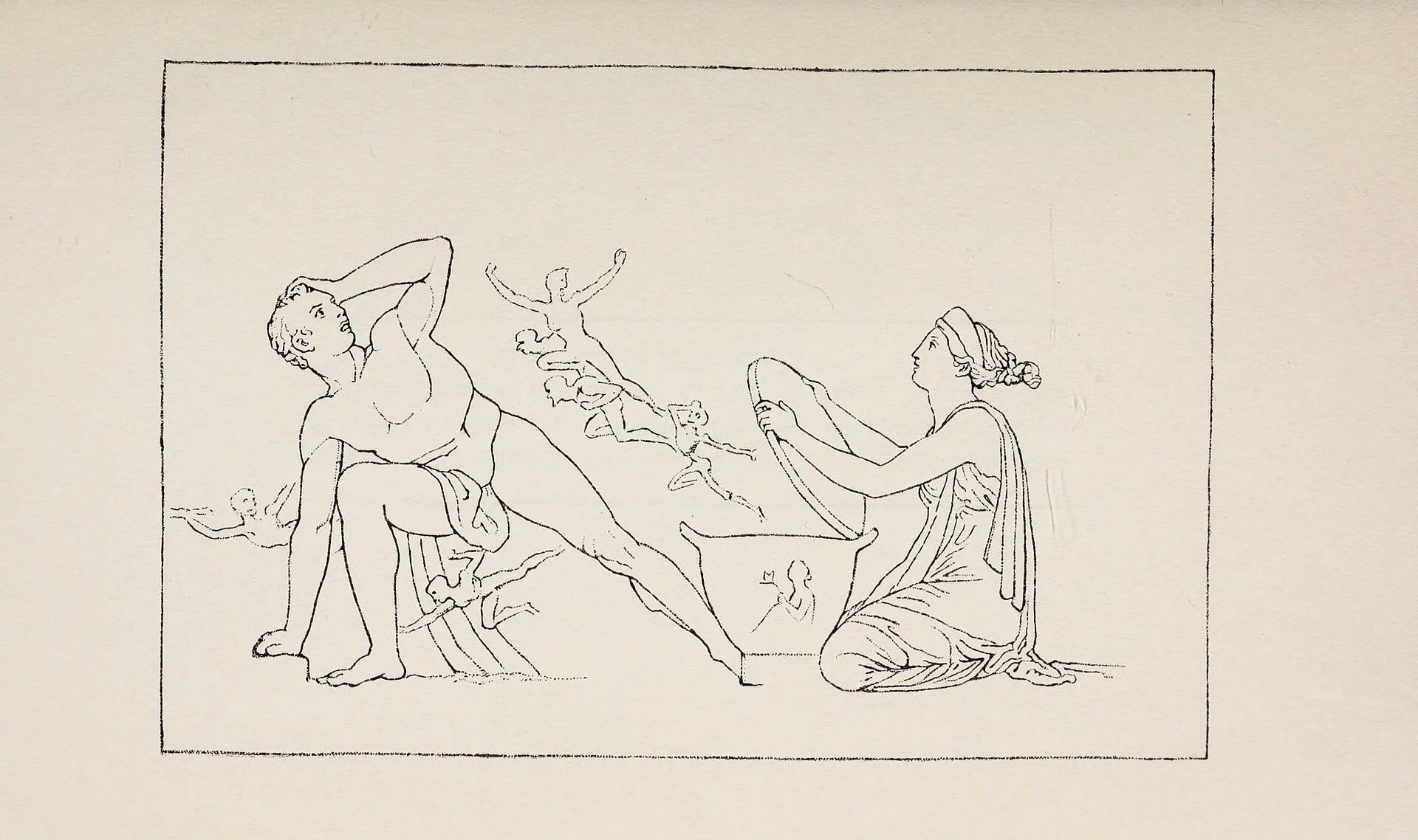
Pandora Opening the Vase, John Flaxman, after Hesiod's Works and Days. (More about this image at the end of the post.)
One question, one thesis.
So many high school students struggle with essay writing because of one thing: bad prompts. The good news is that with a little bit of training, teachers can stop misleading, confusing, and torturing their students. Here's what a bad essay prompt looks like, and how to write a good one.
A prompt that asked for one essay and graded another
The following prompt was given to one of my writing-coaching clients in her tenth grade literature class:
“With every act in Macbeth, Macbeth becomes more evil. Write an essay examining the increasing power and destructive nature of evil.”
This is an expository essay prompt. The student is being asked to explain what is given. (Because the word “examine” is used instead of “explain,” the student must infer that she is being asked to explain what is given in light of the play.)
My client wrote an expository essay in response. She explained and examined, using textual support. I thought she did a good job. Yet she received a failing grade and feedback from a very frustrated and disappointed teacher who wrote, in part: “There is no thesis here: Your thesis is a fact, not an arguable point someone might disagree with.”
So it turns out the teacher wanted an argumentative essay. But what was there to argue?
The fact that Macbeth becomes more evil in every act?
The fact that evil has increasing power?
The fact that evil has a destructive nature?
How could a Catholic student argue with any of this? In the very same response, the teacher critiqued the student for putting things in her paper that were not in line with Catholic theology! The poor student was just trying to give the essay some originality, rather than parroting back the “talking points” she was given.
Why teachers write prompts like this
Too often, as a writing coach, I see prompts that basically tell the student what to think and what to say. These prompts usually come from a teacher who has explained something to the student, likely in a lecture. In the essay, the teacher wants to see the student “explain it back,” so the teacher can see a) if the student “got it,” and b) if the student can quote the text enough to prove that she read it.
You can't blame the teacher. This is the kind of prompt that high school humanities teachers often give when they have received no training in how to assign and grade essays. Here are two more I've seen, both from the same high school history course:
In two pages, discuss how nationalism developed during the Year of Revolutions.
In a paragraph, discuss why the U.S. used atomic weapons. What were the reactions around the world? In particular, what was the Catholic response?
The first asks for a summary. The second is three short-answer questions, not an essay prompt.
The real cost of a bad prompt
Because the school offered no training, there is now one more high school student out there crying on a beautiful summer day, thinking she's not smart enough, because her mom had to hire a writing coach (me) to help her write this essay.
But I can take care of that. Instead of helping her to write, I'll likely call her into my online office and proceed to rip apart the prompt, explaining to the student that she should be crying, because this is a form of torture, and torture is illegal under international law!
But you know what the worst thing is? There will soon be a history teacher out there who, after reading the incoherent essays written in response to this prompt, will go around complaining that the kids these days can't write! The history teacher might even insinuate that the English teachers are dropping the ball. If that teacher has the ear of an administrator, the school might set off on a hunt for a better writing curriculum, then forcing the English teachers to abide by it, completely failing to solve the problem while creating more obstacles for the English teachers.
What a mess!
How to write a better essay prompt
If you want the student to write an argumentative essay, don't use only declarative and imperative sentences in the prompt. Stop feeding the student what you want the student to say. Ask an actual question, one that is genuine, one with a variety of possible responses. Then you are a lot more likely to get your argumentative thesis in return!
A quick check before you assign a prompt:
Is it a real question? Could two thoughtful students answer it differently?
Does it ask for one essay, or several short answers? One question, one thesis.
Does it already contain the answer? If the prompt states the thesis, the student has nothing left to argue.
Does the verb match the essay you want? “Explain” gets an explanation; “Do you agree?” gets an argument.
For example, the Macbeth prompt could become: “Who is more responsible for Macbeth's downfall: Macbeth, Lady Macbeth, or the witches?” Now there is something to argue.
Your next step
School leaders, end the torture. Clean up the mess. The 12-Paper Plunge trains your teachers to assign and grade essays that build real writers!
For Lifelong Learners: About the Image
In Hesiod's Works and Days, Pandora lifts the lid of a great jar, and all the troubles kept inside fly out and scatter over the world. Only Hope stays behind, caught under the rim.
A bad essay prompt works a little like that jar. One careless sentence, and out fly confused students, off-target essays and long nights of grading. But Hope stays behind: a prompt can always be rewritten.
The English sculptor John Flaxman (1755–1826) drew the scene in his spare outline style, which was inspired by the figures on ancient Greek vases.
Image: John Flaxman, Pandora Opening the Vase (Hesiod, Works and Days). Gray ink and graphite. Harvard Art Museums/Fogg Museum, Bequest of Grenville L. Winthrop.

