
Texts · Homer
The Iliad
Learn to read, contemplate and appreciate the first great poem of the West, or to teach it, with a guide who has taught it to high school students for over a decade.
- Ages 14 and up
- One quarter to one semester
- Self-paced or live
- Lattimore translation
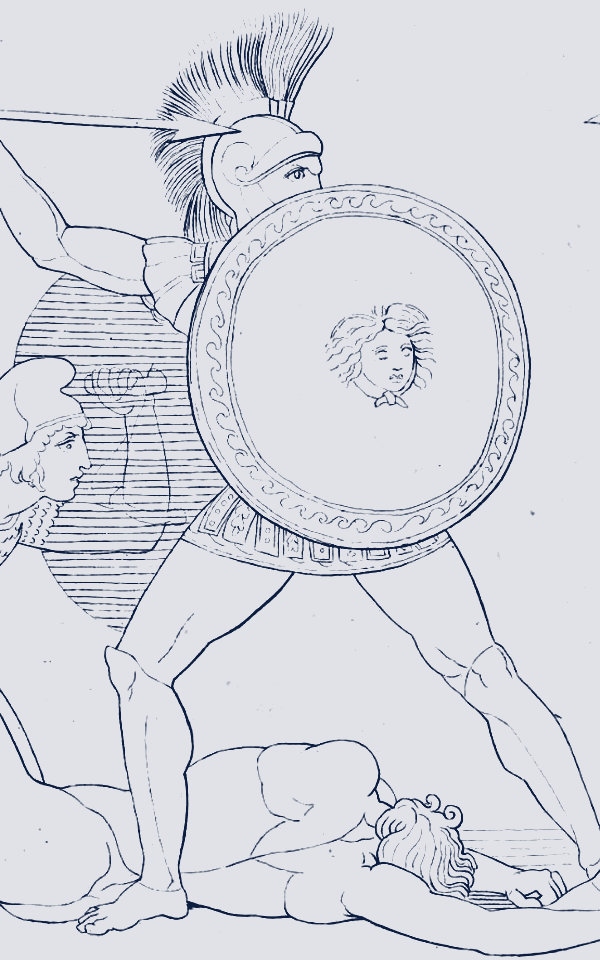
Why read The Iliad?

“Nothing that the peoples of Europe have since produced has been worth the first poem to have appeared among them.”
Simone Weil (1909–1943), “The Iliad, or the Poem of Force”
What students learn
Note-taking
How to keep a reading notebook of observations, questions and line references that they can use in discussions and essays.
Close reading
How to read slowly and carefully, going back to the text to find out what it really says.
15 literary devices
How to spot the devices Homer uses, from similes to symbolism, and explain what they do.
Critical thinking
How to remember, analyze, interpret and evaluate what they read.
Cultural context
How to read the poem in light of its historical and mythological background.
Appreciation for primary texts
What primary texts are and why they are important.
What's inside the “Let's Read The Iliad!” course
Everything a student needs to read, understand and appreciate the epic poem.
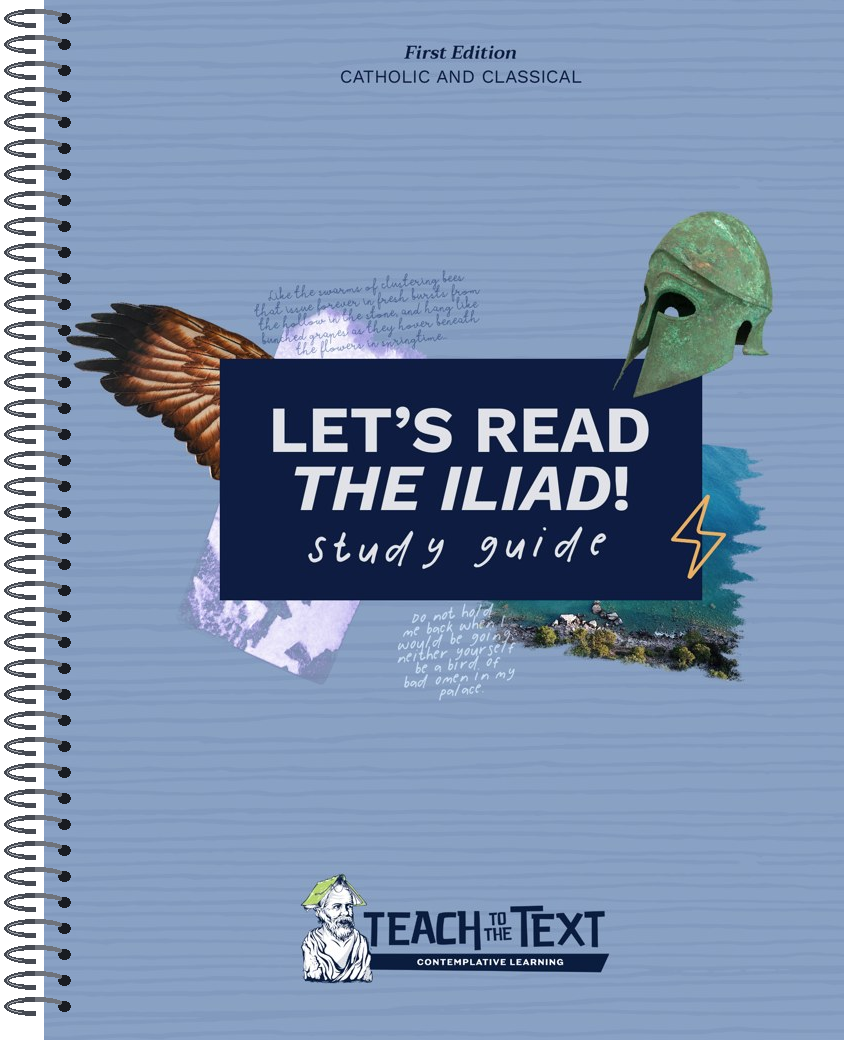
Hard copy study guide
A sturdy, professionally printed guide that lies flat, shipped to your door. Inside:
- Questions that check for understanding and prompt close reading and analysis, with line references and no answer key!
- Well-crafted writing prompts, from minor assignments up to major ones
- Creative projects
- Prompts that spur spiritual reflection
- 15 literary devices, with explanations of how they work in Homer's poem
Video lectures
Ms. Finnigan's "Greatest Hits" lectures, for context and food for thought.
Quizzes
Unit quizzes that check understanding and reinforce key ideas from the guide and the lectures.
A peek inside
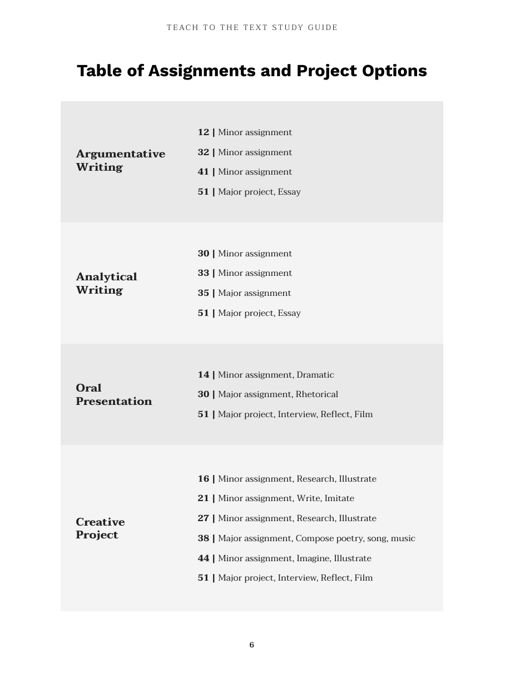
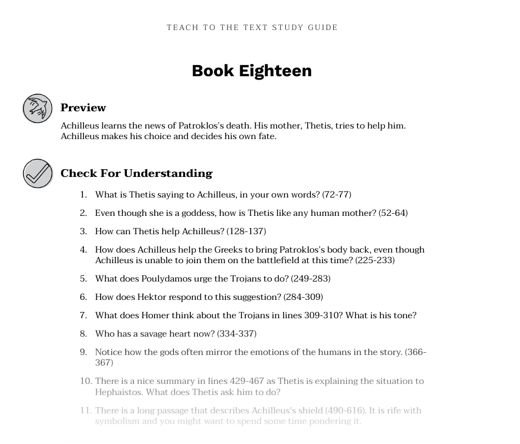
Not included: the book. Please buy Richmond Lattimore's translation of The Iliad.
What families say about the study guide
“The study guides are fantastic; they really help guide the reading of the difficult texts—the first time Michael had read anything ‘ancient’. I liked the quizzes and the study guide questions that forced careful reading.”
“This Study Guide was a lot harder [than others I’ve used], but I think that is because other Study Guides don’t require as much thinking.”
“My daughter is really enjoying this class a lot and really digging into the text. Thank you for that.”
Four ways to study The Iliad with Teach to the Text
Whether you're a lifelong learner, homeschool student, co-op leader, or school teacher, we've got options.
On its own
Let's Read The Iliad! (self-paced)
$125
- Hard copy study guide
- Ms. Finnigan's “Greatest Hits” lectures
- Auto-graded quizzes
- Certificate available upon request
In homeschool bundle
The 12-Paper Plunge Homeschool Bundle
$599
Literature, writing and grammar in one, for parents who coach their teen at home.
- Let's Read The Iliad!
- Let's Read The Odyssey!
- 12-Paper Plunge writing lessons and parent training
- The Sentence Tune-Up grammar review
In live class
Ancient Literature I & Intermediate Composition
$977
Students do the “Let's Read The Iliad!” text study as part of Ms. Finnigan's flagship course, which runs September to April (1.5–2 high school credits).
Learn MoreWith a group
Co-Teaching for Schools & Co-Ops
Get the study guides for all your students or enroll them in the full online course at a discount. Utilize Ms. Finnigan's course materials while your on-site teacher brings the course to life.
Coming Soon
Your guide: Ms. Finnigan
Ellen Finnigan taught high school English and literature at Kolbe Academy for nine years and has taught Homer online for more than a decade. She holds a B.A. in English from Boston College and an M.F.A. in Creative Writing from the University of Montana, and has coached student writers online since 2008.
Questions parents ask
Which translation do we need?
The study guide follows Richmond Lattimore's translation. It is not included, so please buy or borrow a copy before you begin.
How long does it take?
One quarter to one semester, depending on how deeply you study. The self-paced course includes 90 days of access.
Will someone grade my student's work?
The study guide has no answer key. The self-paced course includes auto-graded quizzes, and reports can be provided to the parent upon request or to the teacher in a co-teaching situation. With the 12-Paper Plunge Homeschool Bundle, parents can learn how to grade their student's essays. For a full service option, grading included, check out Ms. Finnigan's flagship course.
Is this course Catholic?
It deals with moral, spiritual, and philosophical questions from a Christian perspective, and it draws on the 2,000-year-old intellectual tradition of the Catholic Church to articulate and present that perspective. However, this is not a theology course. The religious content is very general and should be acceptable to any Christian, whether Catholic, Orthodox, or Protestant.
Not a believer? Perhaps, you will find the religious content interesting from a cultural or historical perspective. After all, the pagans who told these stories for hundreds of years were religious people: They believed in divine beings, they engaged in religious rituals, they worshipped, they prayed. Most of them eventually converted to Christianity. This Study Guide will sometimes ask you to think about differing concepts of the divine, make connections with Sacred Scripture, or engage in introspection and spiritual reflection. If these exercises are not valuable to you, you can easily skip them. They are clearly labeled, and you will still get a lot out of this study!
Should we read The Iliad before The Odyssey?
Yes, if you can! Check out Ms. Finnigan's video on this page for a longer explanation.
Ready to begin?
Start the self-paced course today, or compare all four ways to study The Iliad.
More on Homer and the great books in the Reflections blog.